
How Much Profit Can You Make by Buying from IndiaMART and Selling on Amazon? (With Examples)
Many new ecommerce sellers in India ask one common question:
Alimuddin Mohammed
11/26/20253 min read
The IndiaMART to Amazon Flipping Guide: Your Blueprint for Profit
Ever scrolled through IndiaMART, seen those incredibly low wholesale prices, and wondered, "Can I just resell this stuff on Amazon for a profit?"
The short answer is a resounding YES! This is a legitimate and thriving business model.
But—and it's a big but—the profit isn't a guarantee. It’s a reward for those who choose their products wisely and, most importantly, crunch the numbers correctly. Forget rough estimates; success lies in obsessive cost calculation.
In this no-fluff guide, we’ll break down exactly how to turn Indian wholesale deals into a profitable Amazon business.
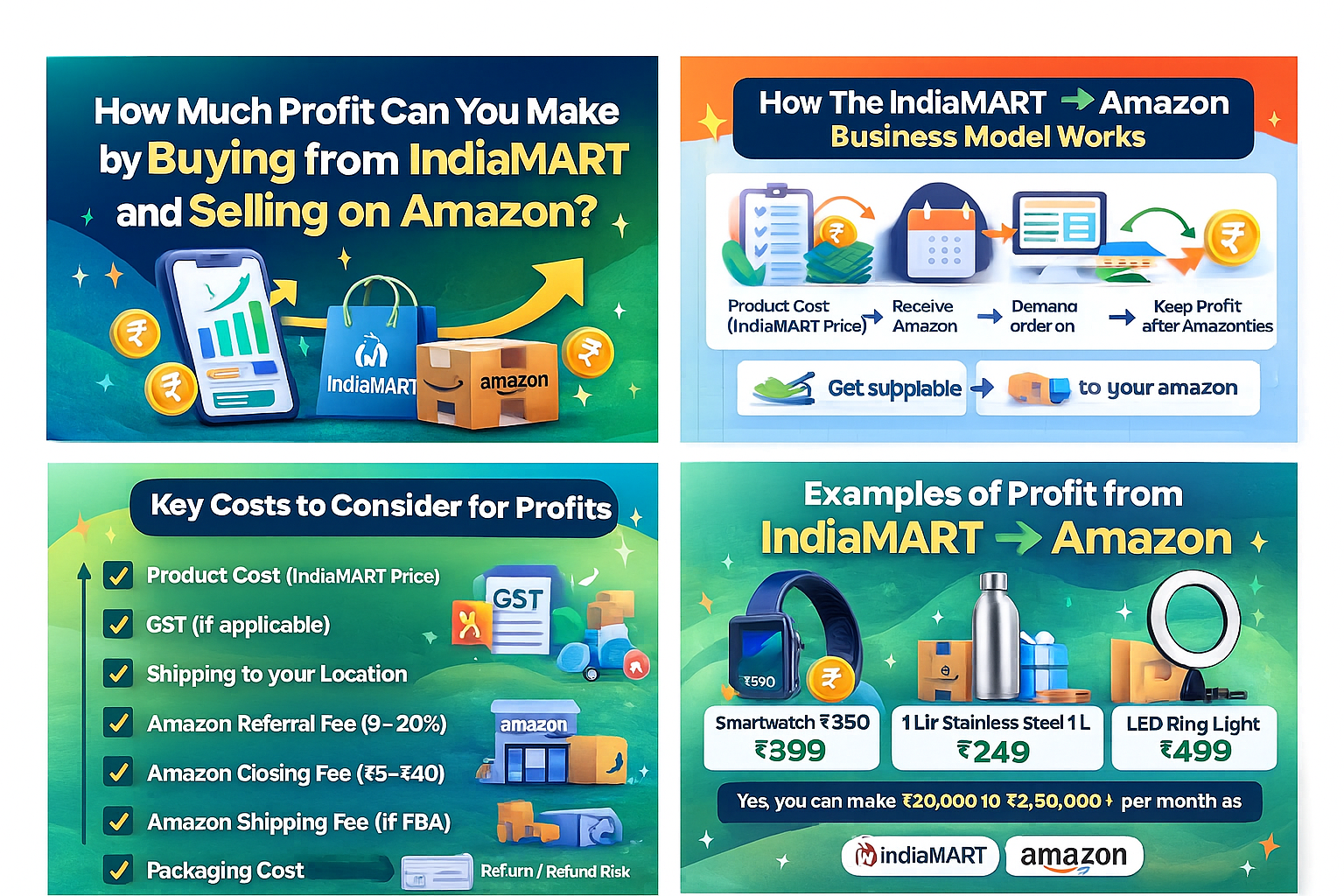
### How the IndiaMART → Amazon Model Actually Works
The process is beautifully straightforward:
1. Source on IndiaMART: You find suppliers and manufacturers for your chosen product. The beauty here is low Minimum Order Quantities (MOQs), direct-from-factory prices, and the ability to negotiate.
2. List on Amazon: You create your product listing. You can either build a brand over time (Private Label) or start by selling as a generic product.
3. Amazon Sells for You: Customers find your product through Amazon's massive traffic. The platform handles the payment and provides the trust factor.
4. Choose Your Fulfillment:
* FBA (Fulfillment by Amazon): You send your inventory to an Amazon warehouse, and they handle all the packing, shipping, and customer service.
* FBM (Fulfillment by Merchant): You store, pack, and ship every order yourself.
5. You Pocket the Margin: After Amazon deducts their fees, the rest of the sale price (minus your initial product cost) is your profit.
### The Profit-Killers: Hidden Costs You MUST Account For
This is where most new sellers fail. Your profit calculation is useless if it doesn't include every single cost:
* Product Cost (from IndiaMART)
* GST (if applicable)
* Shipping from supplier to you
* Amazon Referral Fee (8% - 20% of the sale price)
* Amazon Closing Fee (₹5 - ₹40 per order)
* FBA Shipping Fee (if using FBA, based on size/weight)
* Packaging Materials
* Returns & Refunds (Budget for 2-5% loss)
### Let's Get Real: Profit Calculations with Examples
Enough theory. Let's look at some real-world product examples.
#### 📊 Example 1: The High-Margin Smartwatch
* IndiaMART Cost:
* Wholesale Price: ₹350
* Shipping: ₹20
* Total Landed Cost: ₹370
* Amazon Selling Price: ₹899
* Amazon Fees:
* Referral Fee (12%): ₹108
* Closing Fee: ₹20
* FBA Fee: ₹45
* Packaging: ₹10
* Total Amazon Costs: ₹183
* 💰 Profit Calculation:
* Selling Price: ₹899
* Total Cost (₹370 + ₹183): ₹553
* Net Profit: ₹346 per piece
* Profit Margin: 38%
The Verdict: Electronics can offer insane margins due to low factory costs and high online demand.
#### 📊 Example 2: The Volume-Seller Water Bottle
* IndiaMART Cost:
* Supplier Price: ₹95
* Shipping: ₹15
* Total Landed Cost: ₹110
* Amazon Selling Price: ₹249
* Amazon Fees:
* Referral Fee (12%): ₹29
* Closing Fee: ₹10
* FBA Fee: ₹55 (heavier item!)
* Packaging: ₹10
* Total Amazon Costs: ₹104
* 💰 Profit Calculation:
* Selling Price: ₹249
* Total Cost (₹110 + ₹104): ₹214
* Net Profit: ₹35 per piece
* Profit Margin: 14%
The Verdict: The margin is slim, but the sales volume can be huge, making it profitable overall.
#### 📊 Example 3: The Reliable Performer - LED Ring Light
* IndiaMART Cost:
* Wholesale Price: ₹220
* Shipping: ₹30
* Total Landed Cost: ₹250
* Amazon Selling Price: ₹499
* Amazon Fees:
* Referral Fee (12%): ₹60
* Closing Fee: ₹20
* FBA Fee: ₹60
* Packaging: ₹15
* Total Amazon Costs: ₹155
* 💰 Profit Calculation:
* Selling Price: ₹499
* Total Cost (₹250 + ₹155): ₹405
* Net Profit: ₹94 per piece
* Profit Margin: 19%
The Verdict: A solid, middle-of-the-road product with decent margins and consistent demand from creators and professionals.
### What Should You Sell? The Best & Worst Categories
| Category | Profit Potential | Why |
| :--- | :--- | :--- |
| Smart Electronics | ⭐⭐⭐ High | Extremely low factory prices |
| Phone Accessories | ⭐⭐⭐ High | Huge demand, lightweight |
| Beauty Tools | ⭐⭐⭐ High | Easy to ship, low cost |
| Home & Kitchen | ⭐⭐ Medium | Good, consistent sales volume |
| Fitness Accessories| ⭐⭐ Medium | Decent pricing and demand |
Categories to Think Twice About:
❌ Heavy Steel Bottles: High FBA fees eat your margin.
❌ Bulky Home Items: Same issue with shipping costs.
❌ Grocery/FMCG: Low margins, high competition, and short shelf life.
### The Bottom Line: What Can You Actually Earn?
If you strategically select your products, here’s a realistic picture:
* Average Profit per Item: ₹80 – ₹350
* Monthly Sales for a New Seller: 100 – 500 units
* **Realistic Monthly Profit Potential:** ₹20,000 to ₹2,50,000+
Your focus should be on finding:
✔ Lightweight products (under 500g is a sweet spot)
✔ High-demand, low-competition niches
✔ Reliable and consistent suppliers on IndiaMART
The opportunity is very real. It’s not about finding a "secret" product; it’s about mastering the boring stuff—the math. So grab a spreadsheet, start researching, and your first shipment could be on its way to the Amazon warehouse sooner than you think